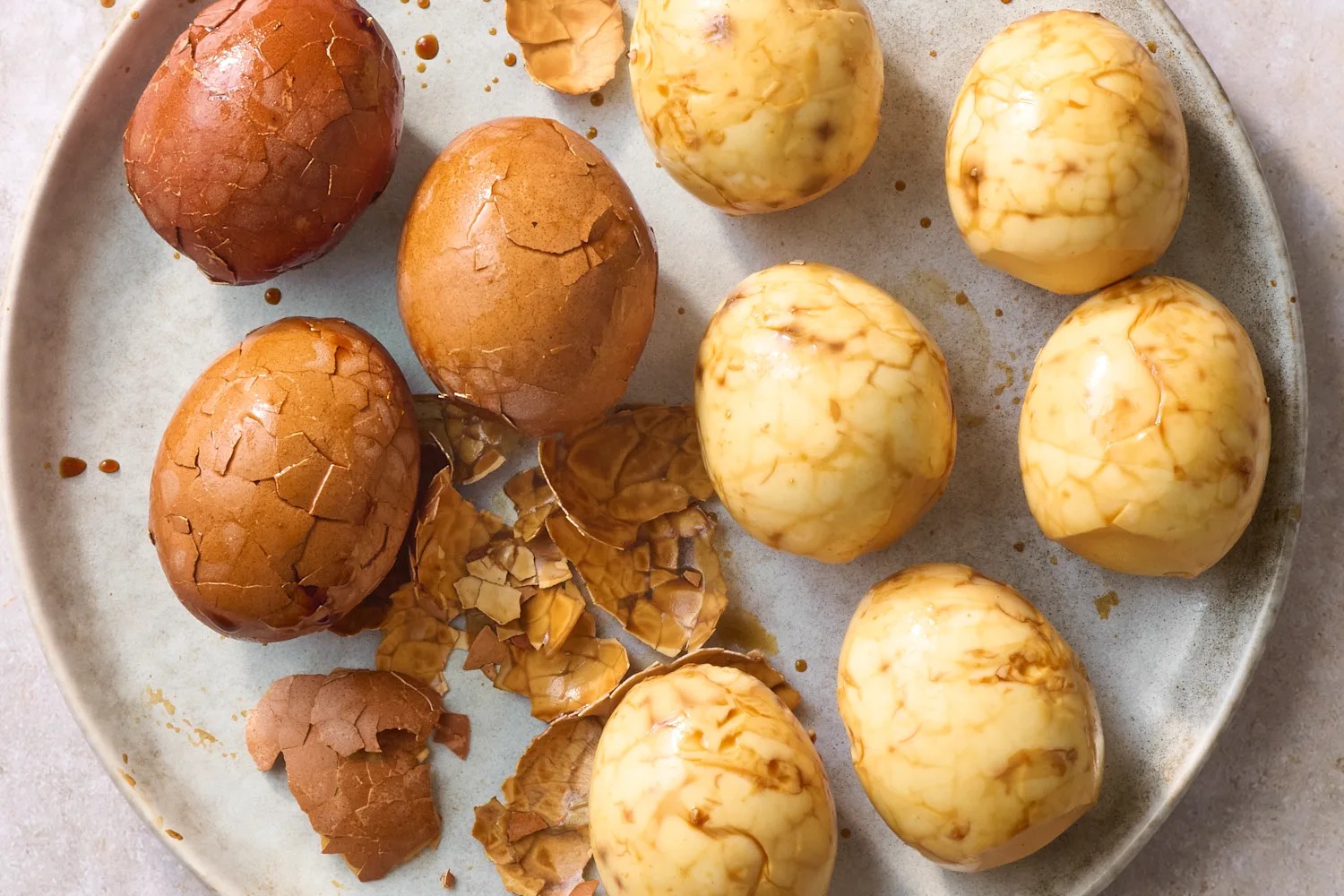
Chinese tea eggs are a beloved snack across Asia, known for their distinctive marbled appearance and rich, savory flavor. These hard-boiled eggs are steeped in a fragrant blend of black tea, soy sauce, and spices, resulting in a deeply infused, satisfying treat. While the process takes time, it requires minimal effort—making it a perfect make-ahead snack or accompaniment to meals.
The History and Appeal of Tea Eggs
The origins of tea eggs trace back to ancient Chinese cooking methods, where preservation through brining and flavoring was common. Today, they remain a staple street food and household favorite. Their appeal lies in the balance of salty, sweet, and umami flavors, alongside the visually striking marbled pattern created by the soy sauce. This pattern isn’t just aesthetic; it indicates how deeply the flavor has penetrated the eggshell and into the egg itself.
Key Ingredients and Their Roles
The success of tea eggs rests on a few crucial ingredients:
- Black Tea: Provides depth and complexity, with oolong being a popular choice for its floral notes.
- Soy Sauce (Dark and Light): Creates the signature marbling and salty base. Dark soy sauce is essential for color.
- Star Anise and Cinnamon: Offer warm, aromatic spice notes that complement the tea.
- Rock Sugar or Brown Sugar: Balances the saltiness with a hint of sweetness.
- Shaoxing Wine: Enhances the overall flavor profile with subtle fermentation notes.
Making Tea Eggs: A Step-by-Step Guide
The process is simple but requires patience. First, gently toast the star anise, cinnamon sticks, and Sichuan peppercorns to release their oils. Then, simmer them in water with soy sauces, Shaoxing wine, sugar, ginger, and bay leaves. Finally, steep the tea (either loose leaf or bags) for 15 minutes before cooling completely.
Meanwhile, hard-boil the eggs until the yolks are custardy yet firm. Crack the shells thoroughly; this ensures the marinade penetrates deeply. Submerge the cracked eggs in the cooled tea mixture and refrigerate for 12–24 hours. The longer they sit, the more pronounced the flavor and marbling will become.
Serving and Storage
Tea eggs can be enjoyed cold, peeled, or drizzled with a little of the marinade. They pair well with steamed rice, noodles, or as a standalone snack. The marinade itself can be reused for subsequent batches after boiling and cooling. Properly stored, tea eggs will last up to three days in the refrigerator.
The beauty of tea eggs lies in their simplicity. It’s a recipe that rewards patience with a depth of flavor and a comforting taste that connects to generations of Chinese culinary tradition.