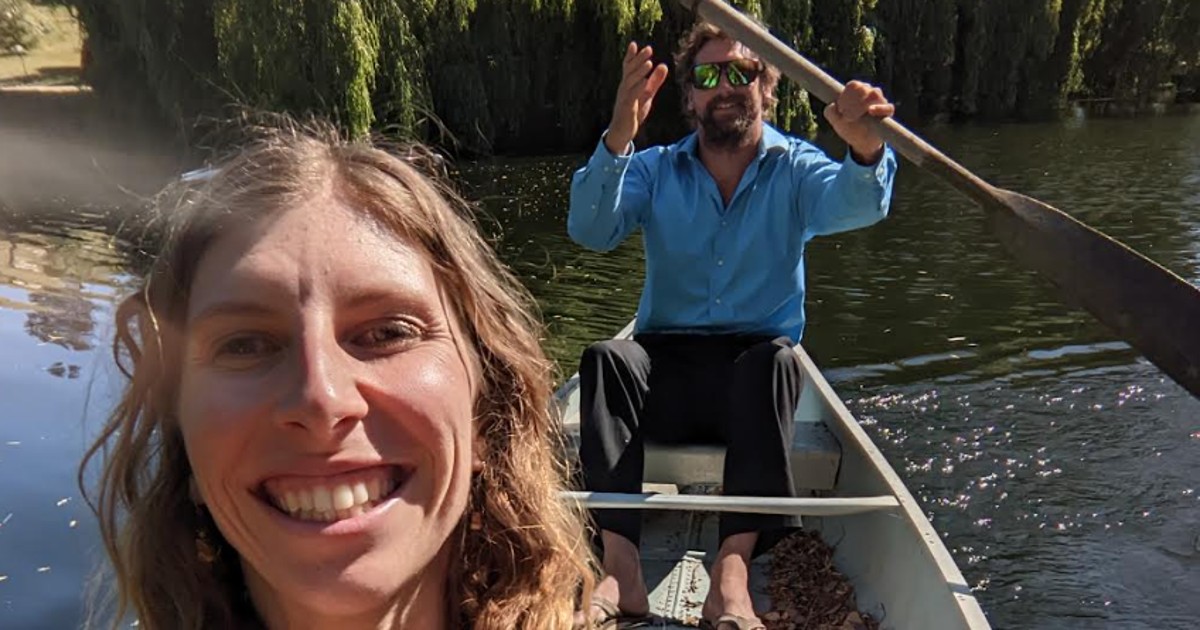
What happens when two introverts are trapped together in a raft for 20 days in the heart of the Grand Canyon? For most, it would be a social nightmare of awkward silences and forced small talk. But for one traveler, this forced isolation became the foundation for the most stable relationship of her life.
The Challenge of Forced Proximity
The journey began with an unlikely pairing. The author, a self-described introvert and rafting novice, found herself as the sole passenger in a raft helmed by Doug—a rugged, soft-spoken “waterman” and former guide.
Initially, the experience was defined by social friction :
– Awkwardness: Early conversations were repetitive and shallow, circling through standard icebreakers like work, school, and hobbies.
– The Introvert’s Dilemma: While other boats in the rafting group were filled with laughter and constant chatter, the author’s raft was characterized by long, heavy stretches of silence.
– Identity Crisis: The author felt a jarring disconnect between her “social” self—the person who could joke and engage in groups during evening campfires—and her “solitary” self, who felt paralyzed by shyness when alone with Doug.
Learning a New Language of Connection
As the expedition progressed deeper into the canyon, a psychological shift occurred. Rather than forcing a connection through words, the pair began to develop a nonverbal shorthand. This transition is a common phenomenon in high-intensity or isolated environments, where survival and shared experience replace verbal communication as the primary way to build trust.
Their bond was forged through subtle, rhythmic actions:
– Shared Rituals: Passing a tea cup without a word or using simple nods to communicate about sunscreen.
– Silent Competence: Trusting Doug’s skill to navigate dangerous rapids, which provided a sense of security that allowed the author to relax.
– Unexpected Moments of Expression: Occasional outbursts—like shouting to point out a bighorn sheep or Doug’s impromptu ukulele concerts—became meaningful milestones rather than interruptions.
“He was showing me who he was rather than telling me.”
By the end of the trip, the author realized she had developed a crush. Crucially, this connection didn’t stem from a sudden “burst” of conversation or a shared list of interests, but from a deep, experiential understanding of each other’s presence.
The Lesson: Why the “Initial Spark” Can Be Deceptive
The relationship survived the transition from the river to real life, lasting over four years. The author reflects on how easily this connection would have failed in a modern dating context.
In an era dominated by dating apps and rapid-fire first dates, we often prioritize “the spark” —that immediate, high-energy conversational flow. However, this piece suggests that:
1. Immediate chemistry can be misleading: A lack of instant rapport doesn’t necessarily indicate incompatibility.
2. Silence is not a vacuum: For many, silence is a sign of comfort and stability rather than a lack of interest.
3. Presence outweighs prose: Building a relationship through shared activities and quiet companionship can create a more durable bond than constant verbal stimulation.
Conclusion: By bypassing the pressure of performative conversation, the two travelers discovered that true intimacy is often found in the quiet spaces between words, proving that compatibility is frequently built through shared experience rather than instant wit.