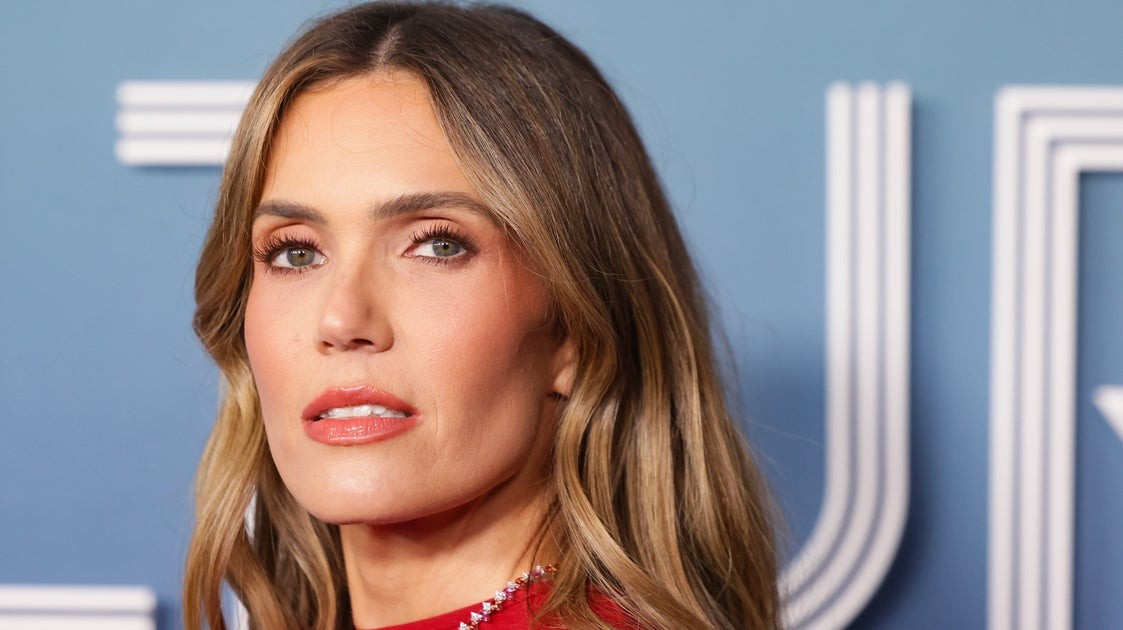
This is what my body looks like. After having three kids in just over three and a half years. Mandy Moore didn’t mince words on Instagram recently. She shared a raw video showing the physical reality of pregnancy and birth. Not the filtered, airbrushed version. But the real, loose-skin truth.
The 42-year-old actress, who is married to musician Taylor Goldsmith, has a house full of little humans: Gus (5), Ozzie (3), and baby Lou (1). That is a lot of diapers. A lot of sleepless nights. A lot of physical demand.
The “Geriatric” Label and Healthcare Systems
Moore isn’t new to talking about the quirks of late-in-life parenthood. She welcomed Lou at age 40. For a long time, that date carried baggage in the public eye. Or so Moore felt.
Last year, during a chat with Kylie Kelce, she tackled the stigma head-on. There is this term: “geriatric pregnancy.” It’s thrown around in medical settings and social circles. Moore called it outdated. She rejected the idea that her friends who have children later are anomalies. Or high-risk projects. Or complications to be managed.
“We’re just human beings,” she said, dismissing the one-size-fits-all attitude of the healthcare system.
It’s not about her friends or their choices. It’s about a system that treats older mothers like outliers rather than normal humans. She pointed the finger at medical structures, not the people in her personal circle. Still, the label stuck for some. And bodies, especially those stretched and restored twice or three times over, draw eyes.
Candidness on Body Image
Moore’s latest move is stark. She posted on July 16. The caption was blunt: “Loose skin and all.” In the clip, she stands in athletic wear, pulling at her abdominal skin. Just showing it. No apologies.
Why now? Why be so vulnerable?
Because the narrative around postpartum bodies is usually broken. Either it snaps back overnight in movies or it’s treated as a failure to fix in reality. Moore chooses neither. She shows the result of three pregnancies. A compressed timeline. A physical history written in stretch marks and muscle memory.
Building Strength, Not Aesthetics
She didn’t stop at the body check. Next came a pull-up video. In the gym. At a gym camera. She admits to being “super awkward” in movement. Not a natural athlete, by her own estimate. That honesty lands differently than polished fitness guru content.
“Committed to getting stronger for the long run,” she wrote.
There is no mention of six-week abs returning. No promise of rapid weight loss. Just the grind. The daily work of rebuilding what birth took apart. And why the focus on strength?
Because raising three kids under four demands stamina. Because “getting ready” isn’t always about aesthetics. Sometimes it’s about the capacity to keep moving. To lift. To run after a five-year-old who never stays still. To stand tall despite the fatigue.
The comments sections for posts like these often divide quickly. Some offer praise for the bravery. Others dissect the biology. Or the parenting choices. Or the age. But Moore seems indifferent to the noise. She answers the question people ask by text and action: “How did it change you?”
It changed the structure. It changed the stamina. And apparently, the mindset.
The healthcare system she criticized earlier still exists. The labels are still in use. But out of sight of those clinics, the reality of raising three small children in three years is messier than any label can capture. It is heavy. It is awkward. And according to Moore, it is strong enough to handle pull-ups.
Does the public really need to judge the recovery process? Probably not. But maybe they need to see what actual recovery looks like without the polish.