


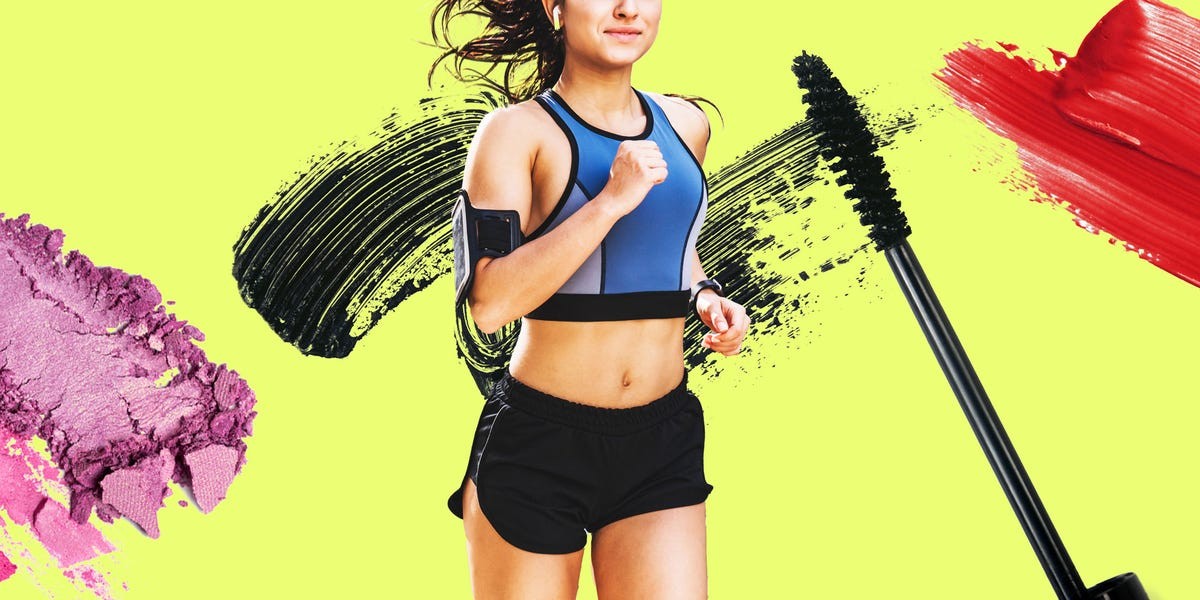
Sneakers laced? Check. Bib pinned? Check. Face covered in glitter? Also check.
A 26.2-mile race doesn’t exactly scream “red carpet.” So why are increasingly more runners showing up to the starting line looking like they’re about to host a makeup tutorial?
It’s a trend that’s splitting the running community in two. On one side, you have the purists who treat the start line like a pit stop. On the other, runners who view the course as a stage. And somewhere in the middle, there’s a lot of noise generated by social media algorithms, beauty brands with deep pockets, and women reclaiming agency over their bodies.
The Social Media Effect on Running Outfits
Jenna Freitas, a 32-year-old runner from Austin, Texas, didn’t always care about race day aesthetics. She ran for six years with zero flair. That changed with RunTok.
“Before RunTok, I don’t thinkrace day glam was nearly as much of conversation,” she says. Scroll through hashtags and you’ll find tutorials on “marathon-ready” hair, sweat-proof lipstick, and matching ensembles for every distance from 5K to ultra-marathon.
Did it pressure her? Absolutely. But she stayed. The reward? A confidence boost.
“Taking the time to feel good… might seem silly to some. But it makes a real difference,” Freitas says. It’s the difference between slumping out of the house and walking with your head up.
But let’s be clear: Nobody owes the running community chic footwear. (Some of us are physically incapable of looking put-together before noon.) Yet, the desire to look good while running is surging. Is it empowerment or just another metric to chase? And how on earth does eyeliner survive a 90-degree sweat fest?
Runners and experts weigh in.
Why Women Choose Glam Over Comfort
Stephanie Simpson, 41 from New York City, has a specific routine: coordinated sneakers, braided hair, matching set. No exceptions. Her marathons look like editorial spreads.
Why? It signals significance.
“On a regular training run, I throw on whatever is in my drawer,” Simpson says. “But race day is special. You paid for it. So why not make it special?”
She wears Crowned Athletics and dusts herself with Princess Pixie Dust. To her, the gear is mental fuel. “What I’m wearing affects how I feel. How I feel affects performance,” she explains.
It’s also a community builder. Simpson wears matching ribbons with her run club. On the course, those ribbons act as beacons. “It reminds you that even if you’re running alone, you’re not,” she says.
Freitas sees the same value. She ran the New York City Marathon with her twins sister in 2025. Matching outfits turned their months of solo suffering into a shared celebration.
How Beauty Brands Are Capitalizing on Running
Let’s look at the economics. Running isn’t just a hobby anymore; it’s a market. Lucy Atkinson, PhD, an associate marketing professor at the University of Texas, notes that advertisers are circling.
Women make up half the race field. They have buying power. Brands want in.
Maybelline sponsored the NYC Marathon for the first time in 2024. They followed it up with the Maybelline Women’s Half. Skincare giant Supergoop! sponsored the Every Woman’s Marathon. The line between beauty influencer and endurance athlete is blurring.
“It’s capitalism,” says Atkinson. “Brands are capitalizing on momentum.”
There are pros and cons. Kelly Roberts, RRCA-certified coach and founder of Badass Lady Gang, admits races need the cash. “Until our country funds community events properly, seeing women-centered brands advertise is inevitable,” she says. Her strategy? Take the free stuff. “Bring on the free LashBlasting mascaras.”
Meanwhile, athletes are earning sponsorships. Sha’Carri Richardson glams up. Sydney McLaughlin-Levrone teams with Neutrogena. Fazit glitter freckles are everywhere. As Mariah Wellman, PhD, notes, this gives content creators a new monetization path. “Audiences are embracing it. It’s not leaving anytime soon,” she says.
The Pressure to Perform
Not everyone is buying in.
Yvonne Armenta, 330, in San Diego, keeps it simple. Pink shorts. Purple top. Blue vest. Black shoes. Dark hat. No makeup. Nothing matches. Nothing “eats.”
“Comfort over aesthetics,” Armenta says. For her, simplicity reduces friction. “Getting out the door takes effort. Adding preparation lengthens the gap between deciding to run and actually going.”
Yet, the pressure creeps in. She vlogs her long runs but feels the urge to “perform.” “I started to feel like I needed to be done up… even though that’s the opposite of my long runs,” she admits.
Even glam fans feel the strain. Freitas, now committed to the aesthetic, says seeing others’ efforts can trigger comparison. “We deal with unrealistic beauty standards every day. That pressure creeps into running, too,” she says.
Does Glam Actually Improve Performance?
Here’s the science.
Erin Ayala, PhD, a sport psychologist and founder of Skadi Sport, believes pre-race rituals—including glam—can strengthen performance. Her reasoning? Enclothed cognition.
The 2012 study coined the term. Participants who wore a coat believed was a doctor’s performed better on tasks than those in painter coats. In running? If you believe your matching set makes you faster, you might just run faster.
A 2025 meta-analysis supports this broadly. What we wear influences how we think and act. A 2022 analysis of 3,700+ athletes found a strong link between body appreciation, sport confidence, and performance.
The takeaway: It’s not about the glitter. It’s about how the glitter makes you feel.
“Running is fun because there are many aesthetics. You get to decide what’s cool,” Roberts says. “Wear what makes you feel confident.”
It’s about autonomy. Acknowledging societal norms while giving yourself space to explore. “Nothing looks as good as clothes that make you feel comfortable,” she says.
How to Level Up—No Glitter Required
You don’t need mascara to optimize your race day. You need psychology.
Create a consistent routine.
It can be simple. Ayala suggests laying out gear, prepping a playlist, or doing a warm-up. Freitas only needs a 30-minute window. “I will never wake up four hours early to do elaborate hair,” she says. Armenta likes a high ponytail and hairspray. Small rituals reduce anxiety.
Visualize the race.
Lauren Lowe, PsyD, guides athletes through mental rehearsal. “Visualize waking up, getting dressed, pinning your bib,” she says. Rehearsing creates predictability. It also helps prep for the tough stuff. Visualize hitting “the wall.” See yourself sitting with the pain instead of fighting it. “Stay strong,” Ayala advises.
Watch your self-talk.
Replace “I hope I finish” with “I trained for this.” A 2024 review supports motivational self-talk. The language you use matters.
Set non-time goals.
Fixating on pace is a trap. Lowe suggests goals like high-fiving strangers or how you want to feel at the finish line. If you want performance goals, focus on strategy. How will you respond to early fatigue?
Avoid the comparison trap.
You’re measuring your messy reality against someone else’s highlight reel. The lighting is perfect. The hair is done. The split times are even. It’s curated. Don’t let it steal your joy.


