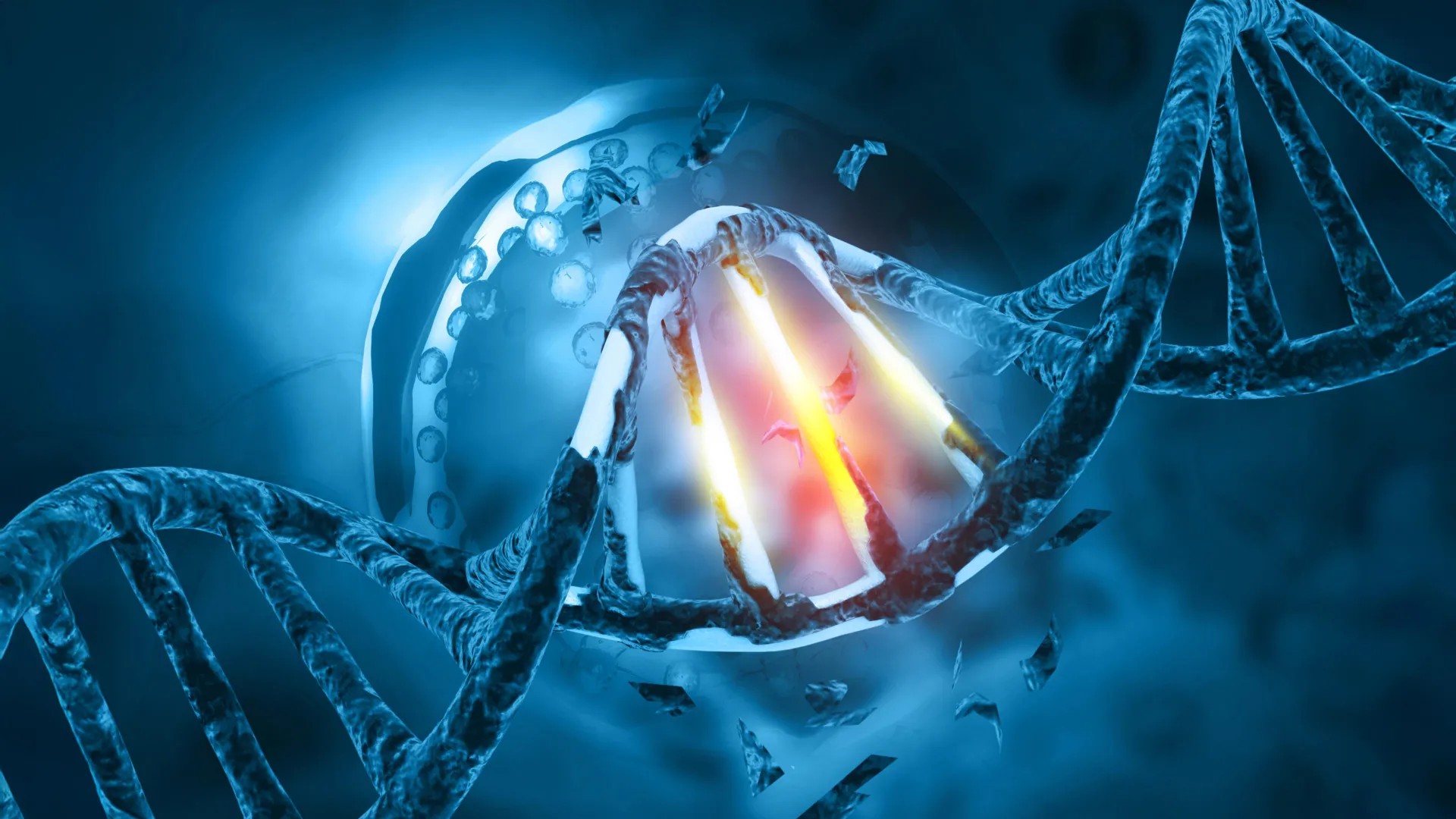
Cancer doesn’t care if you’re having a bad day. It cares if your DNA is broken.
But here is the twist: two people can stand under the exact same toxic cloud. They can breathe the same cigarette smoke. They can eat the same processed foods. One gets cancer. The other doesn’t. Why?
A new study published in Nature suggests the answer isn’t luck. It’s your inherited genetic background.
Researchers from Cambridge, Edinburgh, and partners in Europe and the US have shown that when DNA damage occurs, the path a tumor takes depends heavily on who you are at the genetic level. This changes how we might think about why inherited genes influence cancer progression.
The Mouse Experiment: A Controlled Chaos
Human studies are messy. People eat different diets, live in different climates, and have different life histories. Isolating one variable is nearly impossible.
So, the team went back to basics.
They bred four distinct strains of mice. Each strain had a different inherent susceptibility to liver cancer. The genetic diversity between these mouse strains was modeled to mimic the diversity found in human populations. It wasn’t just about biology; it was about representation.
Then came the trigger.
Every mouse, at exactly 15 days old, received a single dose of diethylnitrosamine. Also known as DEN. It’s a known liver carcinogen. Found in tobacco smoke. Present in some processed foods. DEN slices through DNA, damaging it in ways that can spark mutation and tumor growth.
The conditions were sterile. The dose was identical. The age was fixed. They removed the environmental noise. They wanted to hear the signal of the genes alone.
Nearly 600 tumors were sequenced. The scientists mapped the mutations. They looked at gene activity. They watched how the cancers evolved from that very first broken base.
The MAPK Pathway and the Genetic Hand
Tumors are chaotic. But they are also strategic.
In all four mouse strains, the cancers almost always found their way to the same biological goal. They activated the MAPK pathway.
This is a sequence of molecular signals. It tells cells how to grow. How to differentiate. It’s a highway. And almost all these tumors got on the same exit ramp.
But the route they took to get there? That was personal.
The specific driver mutations depended entirely on the inherited genetics of the mouse. Some strains showed mutations that tweaked other signaling pathways. Others showed a tendency for whole-genome duplication—essentially, the cell copied its entire chromosome set, doubling down on its mistakes.
“Cancer does not arise entirely by chance… the path to that endpoint is determined by individual’s genetic background.”
— Professor Duncan Odom, Senior Author
The tumors reached the same biological endpoint. The road? Determined by DNA.
Precision Medicine’s Next Frontier
What does this mean for you? Or me? Or the next patient walking into an oncologist’s office?
It means “one size fits all” prevention and screening might be outdated before it even hits the shelves.
If genetics steer tumor evolution, then inherited genetics influence cancer risk in ways we’ve only begun to understand. Future screening strategies might need to account for population diversity. Not just age, or lifestyle, but the actual code written in your cells.
Dr. Sarah Aitken, the first author and now at Yale, put it bluntly:
“If genetic background influences both cancer risk and evolutionary trajectory of tumors, future… strategies will need to take into account inherited genes.”
This extends to treatment too. How a patient responds to drugs that damage DNA—like the DEN used in the study—may be tied to their genetic makeup. Tailored diagnostics could help.
Dr. Sam Godfrey from Cancer Research UK called it a “fascinating hint.” A nudge. He noted that while mouse models aren’t perfect proxies for humans, the principle holds water. Cancer starts not just by damage, but by how that damage is managed by the cell’s inherited instructions.
The Open End
We are not mice.
The study was funded by Cancer Research UK and the Medical Research Council. It is rigorous. It is controlled. But humans are complex machines with messy environments and unpredictable lives.
More research is needed. We need to see if this holds true across human populations with varying ancestry, diet, and exposure.
But the implication is clear. The same spark doesn’t always create the same fire. It depends on what you’re burning. And for the first time, we have a clearer map of what that “fuel” actually is.