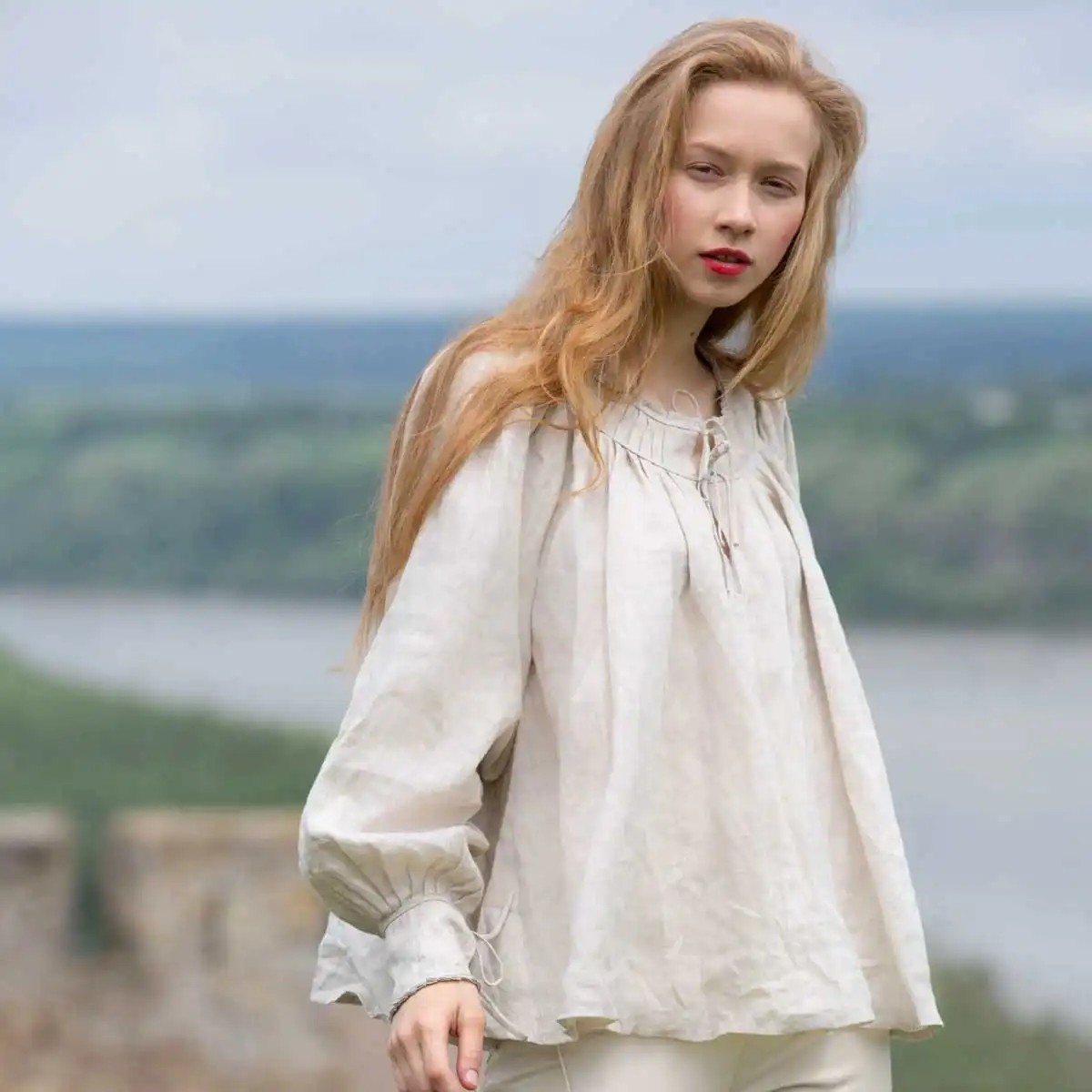
The Middle Ages were not just a blur of castles and crusades. They were a time when daily life, including what you wore, evolved in complex layers. Fashion during this period was defined by long garments, heavy fabrics, and intricate patterns. But one piece stands out as the ancestor of modern layering: the medieval blouse.
These shirts were not mere undergarments. They were structural. Characterized by loose cuts and high collars, they served both men and women. Today, this look is making a quiet comeback. The appeal? It is practical. It is historical. And it fits the current demand for sustainable, timeless fashion.
Why Medieval Blouses Are Making a Comeback
You might wonder why anyone would want to wear a shirt designed for 12th-century monasteries. The answer lies in comfort and versatility. Medieval blouses were designed for movement. They were not restrictive like the corsets that later dominated fashion. Instead, they allowed air to circulate. This made them ideal for long days of labor or courtly gatherings.
Modern wearers are drawn to this same utility. In an era of fast fashion, the durability of these designs is refreshing. The wide cuts accommodate various body types without tailoring. The high necks offer warmth without bulk. It is not about cosplaying a knight. It is about adopting a silhouette that prioritizes human comfort over rigid social codes.
“The medieval blouse was designed for function first. That philosophy resonates deeply with modern minimalists.”
Historical Origins and Construction
To understand where these blouses come from, you have to look at the fabric. Wool was king. Linen was queen. Cotton was rare and expensive. Most blouses were made from these natural fibers. They were breathable. They were durable. And they could be patched repeatedly.
Construction was simple. A rectangular piece of fabric was cut. Holes were made for the head and arms. Seams were sewn with strong thread. This design minimized waste. It also meant that if one part wore out, you could replace just that section. This was early circular fashion.
For women, these blouses were often worn under gowns or kirtles. The sleeves might peek out, adding a touch of color or texture to an otherwise plain outer layer. For men, they served as the primary shirt, often tucked into breeches or hose. The high collar protected the neck from chafing and cold. It was a small detail with a big impact.
How to Wear a Medieval Blouse Today
You do not need a full costume to incorporate this style. The key is in the pairing. Think of the blouse as a statement layer.
- Pair with high-waisted trousers: This mimics the historical proportion while looking contemporary. The blouse can be tucked in or left loose.
- Use as an underlayer: Wear it under a tailored blazer or a modern knit vest. Let the collar or cuffs show.
- Choose the right fabric: Modern versions use linen, cotton, or lightweight wool. Avoid synthetic materials that mimic the look but not the breathability.
- Focus on the fit: The medieval cut is forgiving. Look for pieces with dropped shoulders and a relaxed hem.
Which Medieval Blouse Style Suits Your Wardrobe?
How Social Hierarchy Dictated Medieval Blouse Style
You might think of medieval fashion as a sea of drab robes, but that’s only half the story. Look closer at the blouses. The layers against the skin told a story before the person even spoke. Wealth wasn’t just about what you wore on top. It was about what you wore underneath.
Roman Roots and Fabric Choices
Where did this style come from? The answer lies in antiquity. The Romans wore tunics. They called them tunicae. These were the direct ancestors of the medieval blouse. Made from wool, linen, or cotton, these garments traveled through centuries. They evolved. They adapted. But the basic structure remained.
Material choice was the first signal of status. It was immediate. A wealthy woman didn’t just buy expensive fabric. She bought rare fabric. Silk. Velvet. High-quality wool. These materials draped differently. They reflected light differently. A peasant woman? She wore linen or coarse wool. It was practical. It was cheap. It breathed in the summer but offered little luxury.
Function Over Fashion (Mostly)
Let’s be clear about gender roles. Men wore blouses too. But their versions were different. Male blouses were functional. They were designed for work, for travel, for labor. They were simple. They didn’t need frills.
Women’s blouses were different. They were often more decorative. Why? Because women’s fashion allowed for more visible embellishment in certain contexts. But don’t mistake this for frivolity. Even the “pretty” blouse had a job to do. It protected the skin. It absorbed sweat. It added a layer of modesty under gowns or surcoats.
Regional Variations and Occasions
Geography mattered. A blouse in Italy looked different from one in France. Local weaving traditions influenced cut and texture. You could tell where someone was from by the stitch work.
Then there were the special days. Religious ceremonies. Civic celebrations. These weren’t times for work clothes. Blouses worn on these occasions were brighter. They were more ornate. Colors popped. Embroidery appeared. It was a way to participate in the community’s joy without breaking sumptuary laws.
The Unwritten Rules of Dress
We don’t have exact tailoring manuals from 1300. We don’t. But the rules were clear. If you were poor, you couldn’t wear silk. Period. If you were a merchant, you couldn’t wear velvet reserved for nobility. The fabric itself was the law.
This wasn’t just about aesthetics. It was about order. Society relied on visual cues. Who could you trust? Who had power? Who was working? The blouse, simple as it seems, was a marker. It placed you in the hierarchy.
Did women have any agency here? Of course. They chose the fit. They decided on the length. They controlled how much of the blouse showed beneath their outer garments. It was a small rebellion. A subtle act of self-expression in a rigid system.
The legacy of these garments isn’t just in museums. It’s in the way we layer today. The blouse remains a foundational piece. But back then, it was a map. A detailed, fabric-based map of who you were, where you came from, and what you could afford.
Decoding Medieval Blouse Class and Craftsmanship
It wasn’t just about keeping warm. In the Middle Ages, your blouse told the world exactly who you were before you even spoke.
We think of fashion as fluid today. Back then? It was a rigid code.
Social status wasn’t a suggestion. It was stitched directly into the fabric.
If you had coin to burn, you wore quality. If you were scraping by, you wore what survived the wash.
The Wealthy: Silk, Velvet, and Gold
Rich folks didn’t just buy clothes. They invested in status symbols.
Their blouses were crafted from expensive materials. Silk. Velvet. Fine wool.
These weren’t simple garments. They were canvases for wealth.
Expect heavy embroidery. Intricate patterns that took hours to complete.
Some went further. They pinned jewels to their blouses. Gold thread. Precious metals.
It was loud fashion. Intentional. Unmissable.
Fashion in the Middle Ages was a language. The fabric spoke first.
The Poor: Linen and Durability
Not everyone could afford the spotlight.
The working class relied on cheaper, sturdier fabrics. Linen. Coarse wool.
These materials were affordable. They were practical.
They didn’t shimmer. They didn’t sparkle.
But they lasted.
For the poor, a blouse wasn’t a statement. It was armor against the elements.
Occupation Dictated Design
Class mattered. But so did your job.
A farm laborer needed movement. They wore simple, tough blouses. Built to handle dirt and sweat.
Artisans? They had a bit more flexibility.
Skilled craftsmen often wore slightly more decorative blouses. A nod to their expertise. A subtle flex of social mobility within the working class.
Gender Divides in the Wardrobe
Men and women played different roles in the textile game.
Women’s blouses leaned into decoration.
More lace. More detailing. More complexity.
Men? Function over form.
Their blouses were straightforward. Practical. Designed for work, not for display.
This divide wasn’t arbitrary. It reflected societal expectations of femininity and masculinity.
Styling Medieval-Inspired Blouses Today
You don’t need a historical reenactment to borrow from this era.
The key is texture.
1. Fabric Choice
Skip the synthetic shine. Look for linen blends. Wool. Cotton that feels substantial.
2. Embroidery Details
You don’t need gold thread. A subtle floral stitch on the cuff or collar adds that medieval touch.
3. Layering
Medieval fashion was all about layers. Pair a structured blouse with a vest or a heavy cardigan.
4. Silhouette
Fit matters. Medieval blouses were often looser. Embrace that volume. It’s comfortable. It’s romantic.
Modern women can adopt this approach without the historical baggage.
It’s about quality. It’s about intention.
Wear what says something about you. Even if it’s just the texture of the fabric.
The past was loud. You don’t have to be.
But you can be deliberate.
Ortaçağ bluz modası sadece kostüm partileriyle sınırlı kalmadı. Günümüzde, geçmişin ruhunu modern bir silüete taşımanın en şık yollarından biri haline geldi. Doğru parçayı seçip detaylara dikkat ederseniz, günlük kıyafetlerinize de derinlik katabilirsiniz. Peki, bu tarihi akımı bugüne nasıl taşıyacağız? İşte pratik ve otantik bir görünüm için adım adım rehber.
Doğal Kumaş Seçimi ve Kesişim Detayları
Tarihi bir parçanın kalitesi, kumaşta gizlidir. Ortaçağ döneminde bluzlar genellikle ipek, kadife, yün, keten veya pamuk gibi doğal liflerden üretiliyordu. Bu malzemeler, dönemin dokusunu yansıtmak için kritik öneme sahiptir. Günümüzde benzer bir etki yaratmak istiyorsanız, sentetiklerden kaçın. Pamuklu veya keten karışımlı, nefes alan kumaşlar hem konforlu hem de tarihsel açıdan daha doğru bir tercih olacaktır.
Ayrıca bluzun kesimine dikkat edin. Dönemin bluzlarında yüksek yaka detayları ve önden düğmeli kapanışlar sıkça görülür. Bu unsurları modern bluzlarınızda aramak, stilinize o “eskici” ama zarif dokunuşu katacaktır.
Koyu Renk Paletiyle Otantik Bir Görünüm
Renk paleti konusunda Ortaçağ estetiği sert ve doygun tonlara sahiptir. Siyah, kahverengi, koyu yeşil ve kırmızı gibi tonlar, dönemin moda trendlerinin başında gelirdi. Parlak ve yapay duran renklerden uzak durun. Bunun yerine, toprak tonları ve koyu ana renkleri tercih etmek, bluzunuzun daha otantik bir hava yaymasını sağlar.
Bu renkleri günlük hayatta giyerken, alt parça seçiminizle denge kurmak önemlidir. Koyu bir bluz, genellikle sade bir etek veya pantolonla daha iyi sonuç verir.
Aksesuarlarla Tamamlanan Stil
Bluz tek başına yeterli değildir. Ortaçağ tarzını tamamlamak için aksesuarlar seçici olmalısınız. Kolyeler, özellikle uzun zincirli veya madalyonlu modeller, bluzun yüksek yakasıyla iyi uyum sağlar. Küpe, bilezik ve yüzük seçerken de dönemin metal işçiliğini ve mücevher stillerini referans alabilirsiniz.
Basit ama etkileyici aksesuarlar, bluzunuzu sıradan bir üst parçadan çıkarıp bir “kostüm” veya “tematik stil” parçasına dönüştürür. Ceket veya yelek gibi katmanlı giyim öğeleri de bu görünümü güçlendiren stratejik hamlelerdir.
Saç ve Makyajda Tarihi Yansımalar
Stilinizi tamamlamak için yüzünüzden ve saçlarınıza da aynı özeni göster
Why the Medieval Bluse Aesthetic Works for Modern Women
Forget the heavy velvet capes and restrictive corsets for a moment. The modern interpretation of medieval-inspired fashion isn’t about dressing up for a LARP convention. It’s about reclaiming a silhouette that actually respects the human body. We are seeing a surge in interest for this specific niche—not because people want to look like they are walking into a battle, but because they want to look like they have depth.
There is a reason why this style is gaining traction among women who are tired of fast fashion’s fleeting trends. It offers a tangible alternative to the skin-tight, synthetic fabrics that dominate high streets. When you look at the medieval blouse fashion trends, you are looking at a movement rooted in comfort and individuality rather than conformity.
Comfort Without Sacrificing Style
Let’s be honest about how we spend our days. If your outfit restricts your breathing or chafes after an hour, it fails. Medieval-style blouses are typically cut loosely, made from natural fibers like linen, cotton, or wool. This isn’t just an aesthetic choice; it’s a practical one.
“The loose fit allows for airflow and movement, while natural materials regulate body temperature far better than polyester blends.”
In colder months, the high collars and button closures provide genuine warmth. In summer, the breathable fabric keeps you from feeling like you’re wrapped in plastic. It’s a simple mechanical advantage that modern, trendy cuts often ignore.
Versatility That Defies Seasons
One of the biggest hurdles in building a sustainable wardrobe is versatility. Can this piece work for a casual coffee run and a semi-formal dinner? With these blouses, the answer is often yes.
The cut is forgiving. It pairs easily with:
– Skinny jeans for a juxtaposition of loose and tight.
– Flowing skirts for a romantic, ethereal look.
– Structured trousers for a more grounded, modern silhouette.
– Layered under vests or tailored jackets for depth.
This flexibility means you aren’t buying a costume. You are buying a foundational layer that interacts with the rest of your wardrobe. It bridges the gap between historical appreciation and contemporary daily wear.
Inclusive Sizing and Sustainable Choices
Fast fashion is obsessed with specific body types. This style rejects that premise. Because the cut is wide and unstructured, it doesn’t punish curves or hide them. It accommodates them. Whether you are petite or curvy, the drape of the fabric works with your shape rather than against it.
“Choosing garments made from natural fibers supports sustainable fashion trends and reduces reliance on petroleum-based synthetics.”
This matters. We are all becoming more aware of where our clothes come from. Opting for pieces that mimic historical construction often means higher quality materials and longer-lasting fabrics. It’s a small nod to environmental stewardship that doesn’t require a lecture.
More Than Just a Trend
There is a quiet confidence in wearing something that feels rooted. It’s not just about looking different from the person next to you. It’s about aligning your outward appearance with values like sustainability, comfort, and respect for craft.
When you wear these pieces, you are participating in a continuity of design that has survived centuries. It’s a subtle rebellion against the disposable nature of modern trends.
Are you ready to rethink your wardrobe staples? The answer