


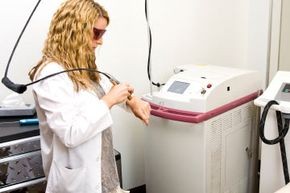
Hair is loud. It speaks before you do. You design it, run your fingers through it, or leave the privilege to someone else. Whether it’s short, long, shaved, permed, spiky, dyed, braided or buzzed, your hair has as much impact as the clothes you wear, the car you drive and the food you eat.
Removing unwanted hair also makes a statement. Women have struggled with excess hair for ages. Men are caught up in the activity, too. In fact, men are so concerned about hair removal that the new term “manscaping” has come into use.
Daily hair removal methods vary from shaving and plucking to using hair removal creams or chemical depilatories. Many salons and spas also offer hair removal services, including threading and waxing. Often these methods are sufficient, but they may not always get the job done. Some may want a more permanent solution. Electrolysis and laser hair removal are two such options.
With so many options, determining the best method can be difficult. Not all methods are suitable for every area of the body or for different hair and skin types. Cost can also play an important role, as more permanent hair removal options tend to be more expensive. Greater potential side effects are also important. And anyone who chooses electrolysis or laser hair removal faces another and crucial decision: choosing a hair removal specialist.
Regardless of the procedure you choose, you should ask around and get answers to some important questions before taking action. Read more about your hair removal options.
Training to become a hair removal specialist
A simple internet search brings up thousands of electrolysis and laser hair removal services. Highly trained professionals such as dermatologists can provide these services, as can technicians at spas and tanning salons. The experience, training, knowledge and skills of these experts vary greatly.
In electrolysis, a needle is inserted into the hair follicle and an electric current is passed through the needle. Electricity kills the hair root. The situation is similar with laser hair removal: the laser destroys the hair follicle to prevent growth. For both procedures, you need someone trained to perform them correctly. Therefore, you should consult a dermatologist or a certified specialist. These professionals are likely to have the highest level of education.
When looking for an electrologist, make sure the person is certified by a reputable program. Certification requires training to ensure that the person using the electrically-charged needle has received sufficient training to ensure your safety and well-being. For laser hair removal, consult a doctor, such as a dermatologist or plastic surgeon. The doctor has special training and medical expertise to treat possible complications or side effects.
Laws regarding required education vary from state to state. So find out about these requirements and make sure your expert has the right qualifications. It’s also helpful to see if he’s been successful in education—advanced education, professional organization memberships, and other certifications are often good signs.
General searches for electrolysis and laser hair removal practitioners can lead to advertisements for special offers and “affordable” permanent hair removal treatments. Permanent hair removal can be expensive, so these deals can seem tempting. You should resist this temptation. Often, the specialists who offer low-cost options have little or no formal training and have only invested in the equipment that allows them to perform the procedures. Entrusting your follicles to these untrained hands can lead to serious—and painful—consequences, such as skin lightening, zebra striping, burns, and even permanent scarring. In such cases, the medical treatments required to repair these damages will cost you more time, suffering and savings.
Read what else you should know before choosing a hair removal specialist.
Hirsutism
Hirsutism, also called hypertrichosis, is a condition in which a person has excessive hair growth. This condition is usually caused by an overproduction of testosterone. Treatments include antiandrogen drugs and, for women, birth control pills, which can help balance testosterone production and reduce hair growth. However, sudden excessive hair growth can also indicate something more serious, such as adrenal cancer, hyperthecosis, or a bad reaction to medications such as danazol or anabolic steroids. If you suddenly experience hirsutism, see your doctor to determine if the hirsutism is natural in origin or has another cause.
Professional reviews: Experience matters
The first step is to find someone with the right qualifications. The second step is to find out if they really know what they are doing.
It’s not just a licensing issue. Even board-certified dermatologists and skin surgeons have varying levels of practical experience. Some people have undergone hundreds of electrolysis sessions. Some are still learning the nuances of laser hair removal. You need to know where your provider falls on the spectrum.
So where do you start?
Ask around. Your circle is a powerful resource. You may get referrals from your friends, family or even your doctor. Personalized recommendations cut through the marketing noise. If you don’t have a personal lead, your digital footprint can help. Websites like Angie’s List and Rate MDs can help you find out what other patients are really going through. It doesn’t tell everything, but it reveals patterns.
However, don’t just rely on the reviews. Face-to-face verification is required.
The Consultation: Your Detective Work
将初次咨询视为面试。 许多从业者免费提供这些。 利用这段时间去挖掘。
提出具体问题。 他们进行这种特定类型的脱毛有多长时间了? How many procedures have they completed? 数字在这里很重要。 More volume通常意味着更多的肌肉记忆和更好的判断力。
要求查看前后照片。 不是库存图片。 皮肤类型与您相似的真实患者。 这种视觉证据是真正衡量质量的唯一方法。
房间也看看。 干净吗? 工作人员有礼貌吗? 你感觉舒服吗? 您在咨询过程中的直觉就是数据。 混乱的办公室可能预示着其他地方的标准混乱。
在这次会议期间,澄清设备的所有权。 从业者是否拥有这台机器,还是租用的? 这是一个微妙的区别,但它会影响维护和保养。
讨论您的具体皮肤类型和健康史。 好的医疗服务提供者会在同意治疗您之前询问您的医疗背景。 他们应该解释风险。 他们应该概述手术前、手术中和手术后会发生什么。 如果他们掩盖细节,请离开。
Safety First: Infection and Equipment
Even after choosing a service provider, safety remains the priority. This isn’t a spa day. This is a medical procedure.
Review infection control protocols. Follow the standards set by the American Electrology Association for electrolysis. These guidelines are consistent with CDC, OSHA, and Association of Physicians of Infection Control and Epidemiology guidelines. Check out these standards if your office doesn’t have them.
For laser treatment, check the equipment. Check the FDA’s medical device database. Make sure the laser you use is approved for hair removal. Don’t settle for “similar” or “advanced” without proof.
Eye protection is non-negotiable. Everyone in the room, including the patient and healthcare provider, must wear safety glasses. If the technician skips this step, exit.
术前准备:避免阳光照射
你将在室内度过数周的时间。 虽然不方便,但却是必要的。
晒黑的皮肤会增加副作用的风险。 起泡。 变色。 疤痕。 即使是喷雾美黑剂或自晒黑剂也会干扰激光对黑色素的瞄准。
在预约前至少四到六周避免阳光直射。 掩饰。 使用阴影。 让任何化学晒黑完全消失。 这项准备工作可以保护您的皮肤并确保治疗按预期进行。
Watch the Deals
廉价的脱毛广告很诱人。 他们承诺用零钱就能快速得到结果。
忽略他们。
大多数皮肤科医生建议不要进行听起来好得令人难以置信的交易。 廉价的供应商经常在设备、培训或安全协议方面偷工减料。 最初的节省很少能证明以后修复拙劣治疗的成本是合理的。
与医生一起工作。 选择一种对您的皮肤安全且适合您的预算的方法。 这是一种伙伴关系。 您的皮肤值得投资。
如果您仍然不确定,请咨询另一位专家。 获得第二意见。 您的皮肤会感谢您的勤奋。
哪里可以找到真正的细节
你有选择。 互联网上充斥着指南,但并非所有指南都是为了确保您的安全或真正有帮助。 如果您正在考虑永久性脱毛,特别是激光脱毛 或电解 ,您需要直接去找源头。 避免废话。
从美国皮肤病学会 开始。 他们有明确的指导,说明为什么在整容手术中越便宜并不总是越好。 他们对激光脱毛的建议很简单。 查看 梅奥诊所 了解实用信息 – 如何在预约前准备皮肤。 跳过晒黑。 剃除该区域的毛发。 防止烧伤的简单规则。
如何选择合适的提供商
这是大多数人容易犯错的部分。 他们选择他们看到的最便宜的广告。 不。
美国皮肤外科学会 有专门的部分介绍如何选择皮肤外科医生。 阅读它。 真的读了。 您正在将高功率光设备或针插入您的皮肤。 做这件事的人需要知道他们在做什么。
对于电解,美国电解协会 保留了一个常见问题解答页面,以消除营销噪音。 它澄清了该程序的实际作用与一些沙龙的承诺。 是的,这是永久删除,但速度也很慢。 这需要耐心。
脱毛杂志 ,特别是埃里克·伯恩斯坦关于选择医生的文章,提供了不同的角度。 他详细介绍了您坐在椅子上之前应该问的问题。 询问他们的经历。 询问具体的激光类型。 询问如果受到刺激会发生什么。 如果他们回避答案,就离开。
了解安全状况
Are these treatments safe? The data shows that they are if done correctly.
The US Food and Drug Administration maintains a medical device database. You will find special lasers and equipment used in the clinic. Because it emits radiation, it is regulated as a medical device. This is not a joke. The FDA also provides consumers with “Laser Facts” information that explains the risks of eye damage and skin discoloration if protocols are not followed.
For those who want to understand the biological aspects, the National Institutes of Health provides authoritative information on excessive and unwanted hair in women through Medline Plus. It is not just a cosmetic fix, but also for the underlying medical reasons. In some cases, 毛发生长 can also be a symptom. Sometimes it’s just genetic. Understanding the differences will help you decide whether you need a dermatology or beauty clinic.
Conclusion of the study
WebMD covers electrolysis in detail, but some of the older articles seem out of date. Use these “how it works” as basic mechanisms rather than the latest technical information.
Foundation Nemours provides a teen-focused perspective that is useful for those new to the subject. Larissa Mirsch’s overview of hair removal is easy to understand and jargon-free.
You don’t need a medical degree to make an informed choice here. Ignore the sales pitch. 核实资质。 Read the FDA warning. Understand that there is no magic wand. It’s all about science, skill and aftercare.
跳过研究 can save you time. However, 你可能会失去皮肤。 Or your money. Or both. 好医生的费用很高。 糟糕医生的代价往往更高。


