Your hands give you away before your face does.
It is January. The wind bites. You keep your scarf high and your coat buttoned, shielding your cheeks from the cold. But your hands? They are out there. Grabbing the subway pole. Signing the receipt. Shoving them into pockets that aren’t quite warm enough. While your face might be protected by layers of expensive cream and makeup, your hands are often forgotten.
This neglect shows.
The skin on the back of your hands is thin. It has fewer oil glands than the rest of your body. It gets blasted by freezing air, harsh soaps, and constant washing. Result? Dryness. Dullness. And those dark spots that seem to multiply overnight. They make you look older than you feel. They make you self-conscious when you reach for a glass of water or shake someone’s hand.
But you don’t need a spa day or a fortune in products to fix it. In fact, the best solutions might already be in your kitchen.
Why Hands Age So Much Faster Than Your Face
Let’s be honest about the biology here. The skin on your hands is delicate. It is not built to take a pounding like the skin on your feet, nor is it as robust as the skin on your back. It is exposed to the elements constantly.
In winter, the problem compounds. You wash your hands more often to fight off cold and flu viruses. You use alcohol-based sanitizers that strip natural oils. You step outside without gloves, letting the freezing wind dehydrate the barrier. This combination wreaks havoc on melanin production.
Pigmentation spots—often called age spots or liver spots—are essentially the skin’s response to cumulative damage. They are clusters of pigment. When the skin is dry and damaged, these spots become more pronounced. They look darker against a backdrop of pale, dehydrated skin. It is a visual cue of stress.
And because we tend to focus our skincare routines on our faces, we ignore this early warning system. By the time you notice the texture changing or the spots deepening, the damage has already accumulated over years.
The Natural Trio for Brighter Hands
If you want to reverse this, you need ingredients that do three things: exfoliate gently, brighten pigment, and hydrate deeply.
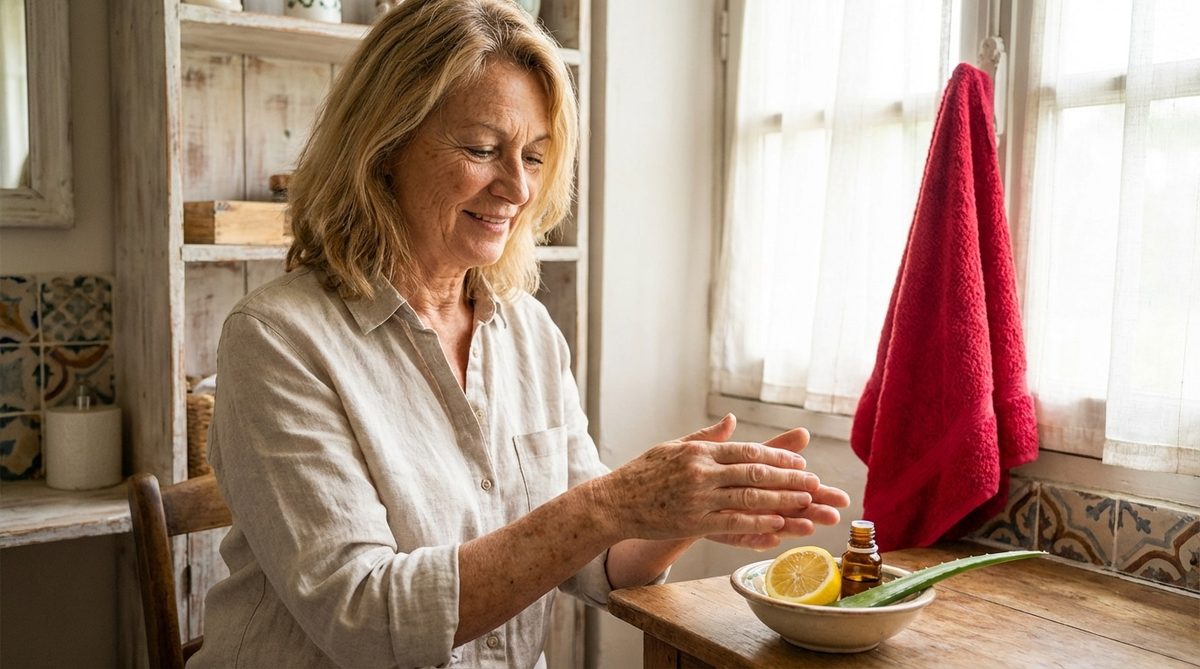
Enter a simple mixture of three common household items: lemon juice, apple cider vinegar, and aloe vera.
This isn’t a complex chemical cocktail. It is a synergy of nature’s cleaners and healers.
- Lemon Juice: Rich in citric acid, it acts as a mild bleaching agent. It helps break down surface pigment and brighten the skin. It is a natural alpha hydroxy acid (AHA).
- Apple Cider Vinegar (ACV): Specifically, unfiltered, raw ACV. It contains acetic acid and various enzymes. It helps balance the skin’s pH level. A balanced pH supports the skin barrier and encourages cell turnover. It gently exfoliates dead skin cells that make hands look rough and dull.
- Aloe Vera: This is the soothing agent. Lemon and vinegar can be drying or irritating if used alone. Aloe vera provides deep hydration, reduces inflammation, and calms the skin. It ensures the treatment strengthens the barrier rather than compromising it.
Together, they form a potent, economical treatment that targets hyperpigmentation without the harshness of synthetic whitening agents.
Step-by-Step: The Evening Routine
You can make this mask in minutes. It takes less effort than scrolling through social media.
The Recipe:
* 1 tablespoon of fresh lemon juice
* 1 tablespoon of pure aloe vera gel
* 1 teaspoon of raw apple cider vinegar
The Process:
1. Mix: Combine the ingredients in a small bowl. Stir until you get a uniform texture. If the lemon is too strong for your sensitive skin, you can reduce the amount slightly, but the vinegar and aloe should remain balanced.
2. Apply: Use a clean brush or your fingertips to apply the mixture directly to the backs of your hands. Focus on the areas with visible spots or dark patches.
3. Wait: Leave it on for about 15 minutes. Do not exceed this time. The acids are active; you want results, not irritation.
4. Rinse: Wash it off with lukewarm water. Pat dry—do not rub.
5. Moisturize: This step is non-negotiable. Immediately after rinsing, apply a rich hand cream. Your skin is primed to absorb moisture. Lock it in.
Frequency:
Do this three times a week. Consistency matters more than intensity. Doing it every day might irritate the skin, hindering the healing process. Stick to this schedule for six to eight weeks. That is the typical cycle for skin cell renewal. You will start to see a difference within a month. The spots will fade. The skin will look smoother.
Protecting Your Results Long-Term
A mask is a treatment, not a cure. To keep your hands looking young, you must change how you interact with them daily.
Winter is the enemy of hand health. Here is how to fight back.
Wear Gloves.
This is the easiest and most effective step. When you go outside, wear gloves. Not just for warmth, but for protection. Wind and cold strip moisture instantly. Cotton gloves are okay, but wool or cashmere is better for insulation. If you are doing chores—washing dishes, cleaning the house—wear rubber gloves. Dish soap and bleach are brutal on hand skin.
Hydrate Aggressively.
Keep a tube of hand cream everywhere. In your bag. On your desk. By the bed. Apply it after every wash. Look for creams with ceramides, glycerin, or shea butter. These ingredients repair the skin barrier.
Diet Matters.
What you eat shows up on your skin. Antioxidants fight the oxidative stress that leads to pigmentation. Eat plenty of seasonal fruits and vegetables. Stay hydrated. Water keeps your cells plump and functioning correctly.
Avoid Harsh Soaps.
Switch to gentle, moisturizing hand washes. Avoid antibacterial soaps unless necessary. They are often too stripping for daily use.
The Bottom Line
Your hands tell the story of your life. They show your work, your hobbies, your age. But they don’t have to show neglect.
You don’t need to invest in high-end clinical treatments to get soft, even-toned hands. You just need to pay attention. Use the lemon, vinegar, and aloe mask. Wear your gloves. Drink your water.
It is a small investment of time and effort. The return is confidence. The next time you reach out to greet someone, let your hands speak for themselves. Let them look as vibrant and healthy as you feel.
The winter cold doesn’t have to define your skin. You have the tools to change it. Start tonight.