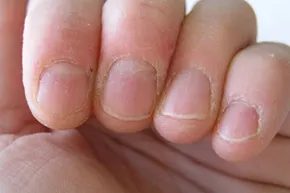
Forget palm readers. The lines on your palm won’t tell you how long you’ll live, and they certainly won’t give you a clear medical diagnosis. There is a slightly deeper way to check your inner health, and it doesn’t require mysticism. It’s right under your nose. Look at your nails.
It’s a simple shift in focus. Instead of staring at the center of your hand, focus on the nails themselves. They are not living tissue, but rather a direct reflection of the living cells at the base of the nail. When these cells are stressed, the nails show it. Changes in color, texture, or shape can indicate a surprisingly long list of underlying conditions.
What your nail color says about your body
If you haven’t painted your nails recently, they should look relatively uniform. A sudden change in pigmentation is often your body’s first alarm system.
Perfect whiteness is not just a manicure accident. It could be a sign of liver disease. If the skin under the nail bed is red, that’s a completely different matter – it could be a sign of heart problems. Then there is the complex yellow color on a blue background, a special combination that often indicates diabetes.
These are not just cosmetic flaws. They are biological signals.
Texture and shape are also clues
It’s not just about the colors. The physical structure of the nail is equally important.
Grooves or pitting? These depressions could mean you have psoriasis, malnutrition or even respiratory diseases. It’s easy to dismiss them as dryness, but keep looking.
Changes in shape are equally important. If your nails start to pull away from the nail bed or curve upward at the sides, that’s a warning sign. This particular change often indicates iron deficiency anemia or thyroid disease. It can also indicate diabetes or a persistent infection.
The list of possible reasons is exhaustive. We’re talking heart failure, protein deficiency, circulatory disorders, fluid in the lungs, kidney disease, lupus, and even lead poisoning. All of these can leave marks on your fingertips.
Don’t panic
Before you start googling rare diseases and hyperventilating over one spotty nail, take a breath. Not every change is a crisis.
White spots? Usually this is just trauma. Did you slam your finger in a drawer yesterday? That’s probably the culprit. Sometimes the inflammation or discoloration is simply nail fungus, which is annoying but manageable.
The goal is not to obsess over your cuticles. The goal is awareness.
Pay attention. Note permanent changes in color, texture, or shape. Especially if these changes are accompanied by other shifts in how you feel generally. If you notice something persistent, let your doctor know. Let them handle the diagnosis.
Your nails do the talking. All you have to do is listen.