


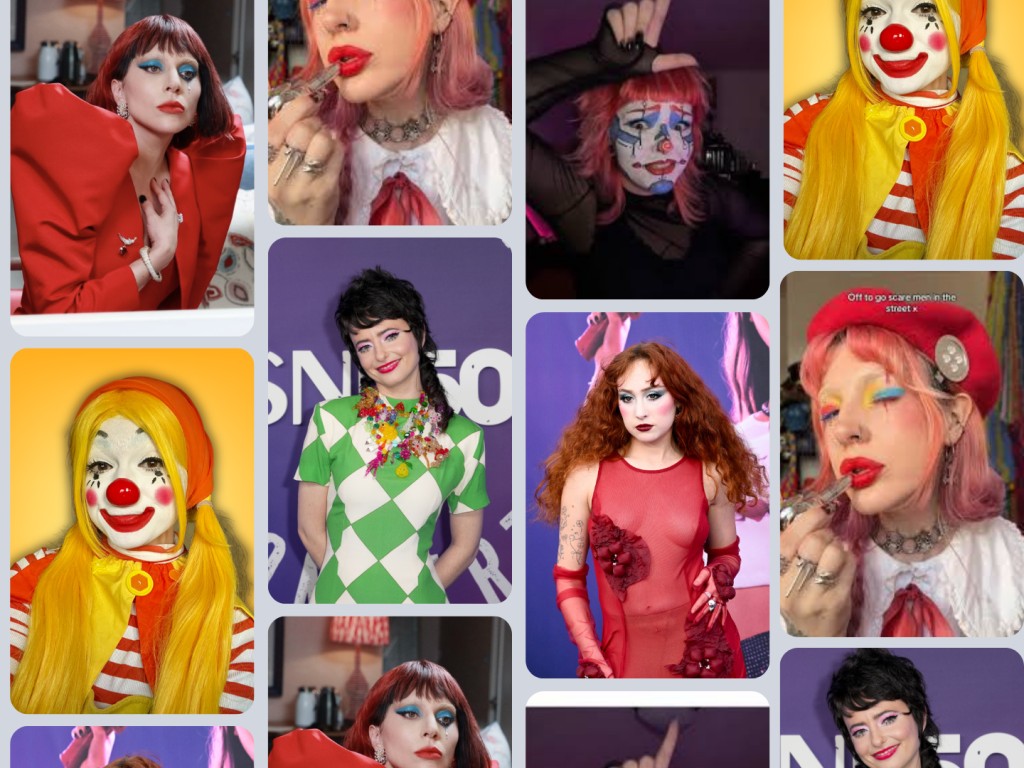
From TikTok feeds to high-fashion runways, a colorful, chaotic, and somewhat unsettling trend is taking hold: Clowncore. What began as a niche internet aesthetic has evolved into a significant cultural movement, influencing everything from luxury fashion collections to the way an entire generation expresses identity and mental health.
From TikTok Trends to High Fashion
The “clowncore” phenomenon first gained momentum in 2022 via TikTok, where creators showcased balloon pants, oversized bow ties, and exaggerated makeup. This movement arrived as a direct rebellion against the “clean girl” aesthetic—a trend defined by minimalist, “no-makeup” looks and slicked-back hair. Where the clean girl aesthetic sought effortless perfection, clowncore embraces maximalism and disruption.
The trend has successfully bridged the gap between digital subcultures and the mainstream:
– Runway Influence: Designers like Marc Jacobs (Fall/Winter 25) and Dior have incorporated puffed sleeves and ruffled collars reminiscent of circus attire.
– Pop Culture Icons: Musical artists are leaning into the aesthetic to redefine their personas. Chappell Roan has utilized colorful, theatrical makeup, while Lady Gaga has explored gothic, harlequin-inspired looks for her 2025 era.
A Sanctuary for Queer Identity
For many, clowncore is far more than a costume; it is a tool for navigating gender. Historically, clowning has occupied a space outside traditional social norms, often defying the male/female binary. This makes the aesthetic a natural fit for the LGBTQ+ community.
According to researcher and performer Jon Davison, clowning can serve as a form of identity protection. By adopting the persona of a clown, individuals can step outside the rigid expectations of societal gender roles.
“If you dress or make up as a clown, that is your identity,” Davison suggests. “It’s like a protection that you kind of form before going out there into the big scary world.”
For performers like Scrambles the Clown, a gender-fluid performer, the aesthetic provides a sense of liberation. The ability to change one’s look drastically allows for a fluid expression of self that traditional fashion often restricts.
The Dual Nature: Joy vs. The Macabre
Clowncore is not purely whimsical; it possesses a dark, psychological edge that reflects the complexity of the human experience. The trend often oscillates between two extremes:
1. The Absurd and the Pathos
On social media, a common trend involves users applying clown makeup while recounting embarrassing or traumatic memories. In this context, the clown represents vulnerability and failure —a way to lean into the “pathos” of life by presenting oneself as a figure of ridicule.
2. Horror and Nihilism
The “scary clown” trope is also being reclaimed through art. Comedian Sarah Sherman blends clowning with body horror, while singer-songwriter Audrey Hobert uses the metaphor of the clown to explore themes of mania and the “disarming horror” of seeking human connection. This darker side suggests a sense of nihilism —a way to process a world that often feels nonsensical or overwhelming.
Finding a Place in a Chaotic World
Ultimately, the rise of clowncore may be a symptom of the current cultural and political climate. In an era characterized by rapid change and social instability, the clown offers a way to occupy space loudly and unapologetically.
Whether used as a shield for gender identity, a mask for mental health struggles, or a beacon of “nonsensical silliness,” clowncore provides a sense of belonging. It allows Gen Z to respond to a chaotic world by choosing either radical whimsy or expressive, stylized discomfort.
Conclusion: Clowncore is a multifaceted movement that uses the exaggerated imagery of the circus to navigate complex issues of gender, mental health, and social instability, offering a way for individuals to find identity in an unpredictable world.


